Difficulty swallowing, known medically as dysphagia, is among the most common effects of stroke. It can be distressing for patients and worrying for families, yet with expert assessment and rehabilitation, many people recover safe, comfortable swallowing.
Why does stroke affect swallowing?
Swallowing is a complex act involving many muscles and nerves in precise coordination. A stroke can weaken these muscles or disturb their timing, making it harder to move food and liquid safely from mouth to stomach.
Warning signs worth noticing
- Coughing or choking during or after meals
- A wet or gurgly sounding voice after eating or drinking
- Food lingering in the mouth or feeling stuck in the throat
- Meals taking a very long time to finish
- Unexplained weight loss or fading interest in food
- Repeated chest infections, which can signal food or liquid entering the airway
If these signs appear, seek a professional swallowing assessment promptly. Silent aspiration, where food or liquid enters the airway without any cough, can also occur, which is precisely why expert evaluation matters.
How swallowing rehabilitation works
A trained swallowing specialist first identifies which stage of the swallow is affected. The personalised plan may then include targeted muscle exercises, safe swallowing techniques, adjusted mealtime posture, and guidance on suitable food and liquid textures.
The family's role in recovery
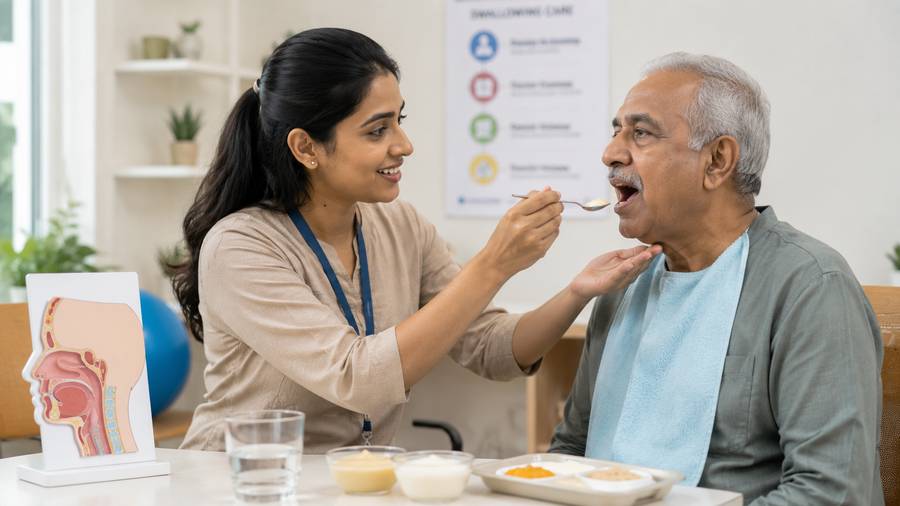
Families and caregivers are central to safe recovery. Simple practices help greatly: ensure the person sits fully upright at meals, keep distractions low, encourage small bites and sips, and allow unhurried time. Your therapist will teach techniques specific to your loved one.
There is real hope
Swallowing often improves in the weeks and months after stroke, especially with early, structured rehabilitation. Every safe meal is a step toward independence, nutrition and dignity. With professional guidance and family support, recovery is a journey taken together.
Caring for someone after a stroke?
Our dysphagia specialists will assess, guide and support your family.
Book a Consultation →